Rebalancing your portfolio
Published: Oct 17, 2022
Updated: Oct 17, 2022
Learn about the benefits of rebalancing your portfolio.
Typically when you build and allocate your portfolio, you consider your risk and investment goals. One way to stay on track with these things is to manage or “rebalance” your portfolio. This is also because investments grow at different rates, and over time your portfolio could drift away from your strategy. When you rebalance your portfolio, you’re reorganizing your investments to fit your target asset allocation.
How a portfolio can become unbalanced
Since investments have different levels of risk and returns, it may “unbalance” your target portfolio over time if not checked and rebalanced accordingly. Let’s look at a hypothetical example below.
Say your target portfolio allocation is split into four ETFs (30/30/30/10 split) with different levels of risk and return. The first three assets (“ETF A” to ”ETF C”) have 30% allocation. However, the last one (ETF D) has only a 10% weighting because despite its higher return, it comes with more risk. Please note that this asset allocation will depend mostly on your investment goals and risk tolerance.
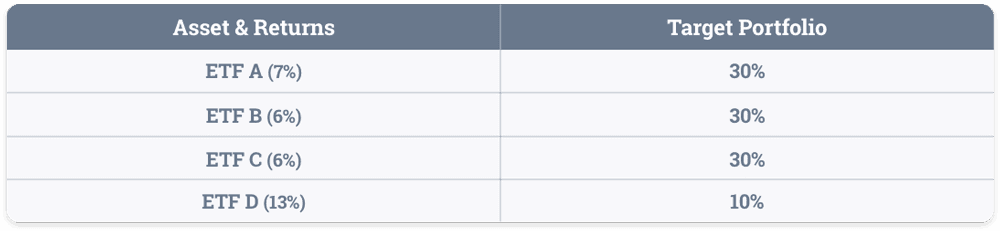
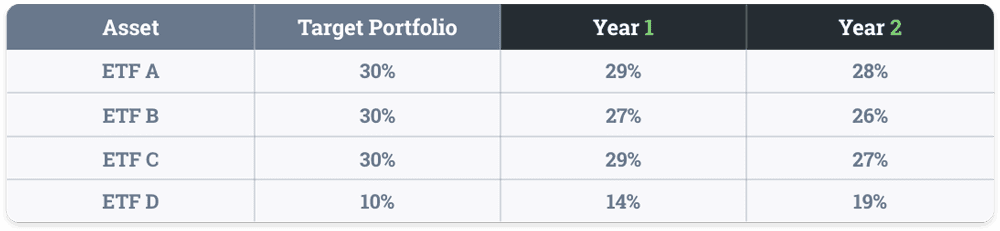
Since ETF D has a higher return, it may eventually take up more of your asset allocation. In this case a year later, ETF D increases to 14% while the rest of your assets went down a bit. The second year comes and ETF D continues to increase to 19% of your asset allocation while the others continue to decrease their weightings. This exposes you to more risk as your higher risk asset (ETF D) is now taking up more of your portfolio. If this happens, you may want to rebalance your portfolio (manually or with an automated rebalancing tool) to readjust it to your target asset allocation.
Manual Rebalancing
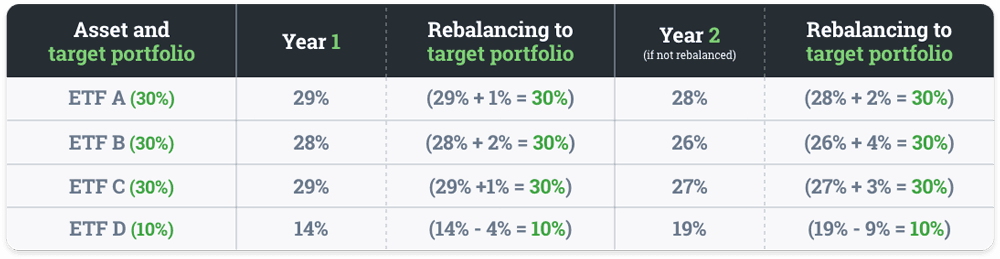
One way to manage your portfolio is rebalancing it manually. This means selling some shares of your assets that have had a higher return and reinvesting to match your targets. Using the same example above, in year one you’ll have to sell 4% (or 9% in year two) of ETF D shares and reinvest the rest to ETF A-ETF C. This process will rebalance your portfolio to your original portfolio allocation.
Please note: Selling shares may be subject to capital gains taxes or capital losses upon liquidation. Please ensure to consult with a tax advisor when liquidating your investments.
So how often should you rebalance? The frequency varies from person to person and may change if your investment goals and risk tolerance change.
Automated Rebalancing (Passiv)
You can also automate the rebalancing process with our partner Passiv. Passiv lets you track, rebalance and send you alerts when your portfolio’s target allocation is not in the right proportion.
How you’re going to rebalance your portfolio is solely going to depend on your investment goals and situation. There is no one-size-fits-all method on this process but understanding the importance of implementing it could help in your investment journey.