Why bear markets matter and how to use them to your advantage – Questrade
Published: Nov 17, 2021
Updated: Apr 08, 2026
Your Detailed Guide to Understanding Bear Markets | Questrade
Why bear markets matter and how to use them to your advantage
Understand what a bear market really means, how it differs from a bull market, and what smart investors do when the market turns. From definitions to real strategies, this guide explains it all.
If you've ever watched the market dip and felt your stomach drop along with it, you're certainly not alone. Market downturns can be unsettling—even for seasoned investors. But understanding what a bear market is, why it happens, and how to respond can give your trading a powerful edge.
This guide will provide a clear bear market definition, explore the difference between a bear market vs bull market, and most importantly, equip you with strategies for investing in a bear market with confidence.
What is a bear market?
A bear market is when the value of a broad market index—such as the S&P 500 (opens in a new tab) or TSX Composite—falls by 20% or more from recent highs, typically over a period of at least two months. It reflects widespread pessimism, lower investor confidence, and could even signal an economic slowdown or recession.
But what about its name? The term "bear market (opens in a new tab)" likely originated from the early 1700s proverb, "Don't Sell the Bear Skin Before You've Caught the Bear," as traders engaged in short-selling—profiting from anticipated price drops on shares they didn't yet own. These speculators were initially called "Bear Skin Jobbers," then simply "Bears," leading to falling markets being labeled "Bear markets."
Quick bear market definition
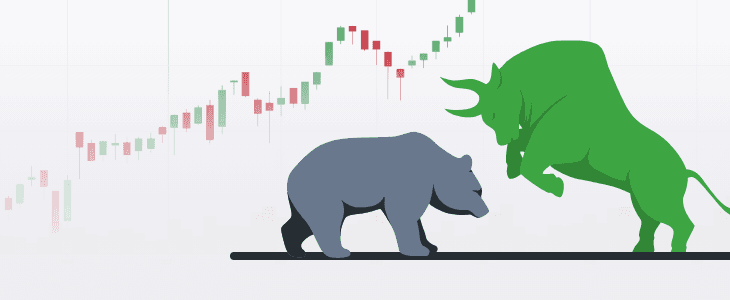
Here's the bear market explained: it's a period when prices fall by 20% or more from recent highs, often driven by fear, uncertainty, and economic challenges. But, bear markets are a natural part of market cycles. They're not the end of the world by any stretch, and in fact, can offer a strategic investment opportunity.
Bear market vs bull market: Understanding the difference
To truly understand a bear market, it helps to compare it to its more optimistic cousin: the bull market.
Bear market:
Market drops by 20% or more
Driven by fear and pessimism
Often aligned with recessions
Investor strategy: defensive
Bull market:
Market rises by 20% or more
Driven by confidence and optimism
Often aligned with economic growth
Investor strategy: growth-oriented
While bear markets may dominate the headlines with negative sentiment, it's worth remembering that bull markets tend to last longer and have historically generated greater gains over time.

What causes a bear market?
A bear market can be triggered by a variety of factors, including:
Rising interest rates: Higher borrowing costs slow down spending and investing.
Economic slowdown or recession: Falling GDP, rising unemployment, or shrinking consumer confidence.
Geopolitical tensions: Wars, pandemics, or trade conflicts that introduce uncertainty.
Corporate earnings decline: When company profits fall short of expectations, investors may pull back.
Investing in a bear market: Strategies for success
Here's the good news: investing in a bear market isn't just about damage control—it's also about long-term opportunity. History shows that bear markets are often followed by strong rebounds. Here's 5 strategies for success when investing in a bear market.
1. Stick to your plan
Don't panic-sell—knee-jerk reactions can lock in losses. If your portfolio is built with long-term goals in mind, stay the course.
2. Rebalance thoughtfully
As prices fall, some of your asset classes may become over- or under-weighted. Use this time to rebalance your portfolio in line with your risk tolerance.
3. Look for bargains
Bear markets can create opportunities to buy high-quality stocks at a discount. Focus on companies with strong balance sheets, consistent earnings, and durable business models.
4. Dollar-cost average
Rather than trying to time the bottom, consider spreading your investments over time. This approach reduces the impact of market swings and helps lower your average cost per share.
5. Build your emergency fund
If the economy is a little uncertain, do your best to make sure your personal finances are stable. Having 3–6 months of expenses in cash can give you the confidence to stay invested.
Why bear markets matter and how to use them to your advantage
Understanding the ins and outs of a bear market helps demystify one of the most emotionally challenging parts of investing. While it's tempting to view bear markets as something to fear, they're also:
A natural part of market cycles
A chance to reassess your investment strategy
An opportunity to buy when others aren't
And remember: every bear market in history has eventually led to a new bull market.
Riding out the bear
A bear market, when approached with strategy, patience, and perspective, presents a period of opportunity. By truly understanding the difference between a bear market vs. bull market and using downturns to your advantage, you're not merely surviving the market—you're mastering it, and in doing so, strengthening your financial future.
Ready to turn market dips into opportunity? Open a Questrade account in minutes (opens in a new tab).